Every parent wants their child to grow into a confident, capable and respected adult. When we think about a child’s future, we often focus on education, opportunities and achievements. Yet one of the most powerful tools for success is something many people take for granted: the ability to communicate clearly and confidently.
Speech is much more than the correct pronunciation of sounds. It is the bridge between a child’s thoughts and the world around them. It is how they make friends, express emotions, ask for help, share ideas and develop their sense of identity. A child who can communicate effectively often finds it easier to connect with others, participate in group activities and navigate social situations with confidence.
Research in developmental psychology consistently shows that communication skills influence far more than language development alone. Children who can express themselves clearly are often perceived as more confident, more capable and more socially mature. Fair or not, first impressions matter. The way a child speaks can affect how teachers, classmates and even future employers respond to them throughout their lives.
Many parents assume that speech development is simply a phase that children eventually outgrow. Sometimes that is true. However, when communication difficulties persist, they can quietly influence self-esteem and social development. Children are remarkably aware of how others react to them. A puzzled look, a request to repeat themselves or a laugh from another child may seem insignificant to an adult, but these moments can leave a lasting impression on a young mind.
Psychologists often speak about the importance of competence in childhood. Children develop confidence when they feel capable and effective in the world around them. Every successful interaction strengthens that confidence. Every time a child communicates a thought and feels understood, they receive a small but meaningful psychological reward. These positive experiences accumulate over time and contribute to a strong sense of self-worth.
Clear communication also plays a significant role in social belonging. Human beings are naturally social creatures and children are no exception. They want to be included, understood and accepted by their peers. Difficulties with speech can sometimes create unnecessary barriers in these interactions. Children may become hesitant to participate in conversations, avoid speaking in front of groups or withdraw from social opportunities altogether.
Our programme is designed with these psychological realities in mind. We do not focus solely on correcting sounds or practising speech exercises. We focus on helping children build confidence through successful communication experiences. Each activity is carefully designed to create small victories that encourage participation and reinforce positive self-belief.
Another important consideration is the development of language itself. The ability to organise thoughts and express them clearly influences academic performance across nearly every subject. Children who communicate effectively often find it easier to answer questions, participate in discussions, explain their reasoning and engage with learning opportunities. Strong communication skills become a foundation that supports growth in many other areas of life.
Parents are often surprised to discover how closely communication and emotional intelligence are connected. Children who can describe their feelings accurately are generally better equipped to manage frustration, resolve conflicts and seek support when needed. The ability to articulate emotions is not simply a language skill. It is a life skill that contributes to resilience, emotional wellbeing and healthy relationships.
There is also a social advantage that extends far beyond childhood. People naturally respond positively to individuals who communicate with clarity, confidence and poise. Throughout history, articulate speakers have often been perceived as more trustworthy, more intelligent and more influential. While every child has a unique personality, helping them develop strong communication skills gives them a valuable advantage that can serve them throughout their lives.
Many parents dream of raising children who can walk into any room and express themselves with grace and confidence. Not because they wish their child to appear superior to others, but because they want them to feel comfortable in their own voice. There is something undeniably powerful about a person who can communicate their thoughts calmly, clearly and thoughtfully. Such individuals often command respect without demanding it.
Our programme aims to nurture exactly that kind of confidence. We want children to develop the ability to speak clearly, share ideas openly and express themselves with the kind of natural elegance often associated with excellent education and strong self-assurance. Communication is not about sounding perfect. It is about being understood and feeling confident enough to participate fully in the world around you.
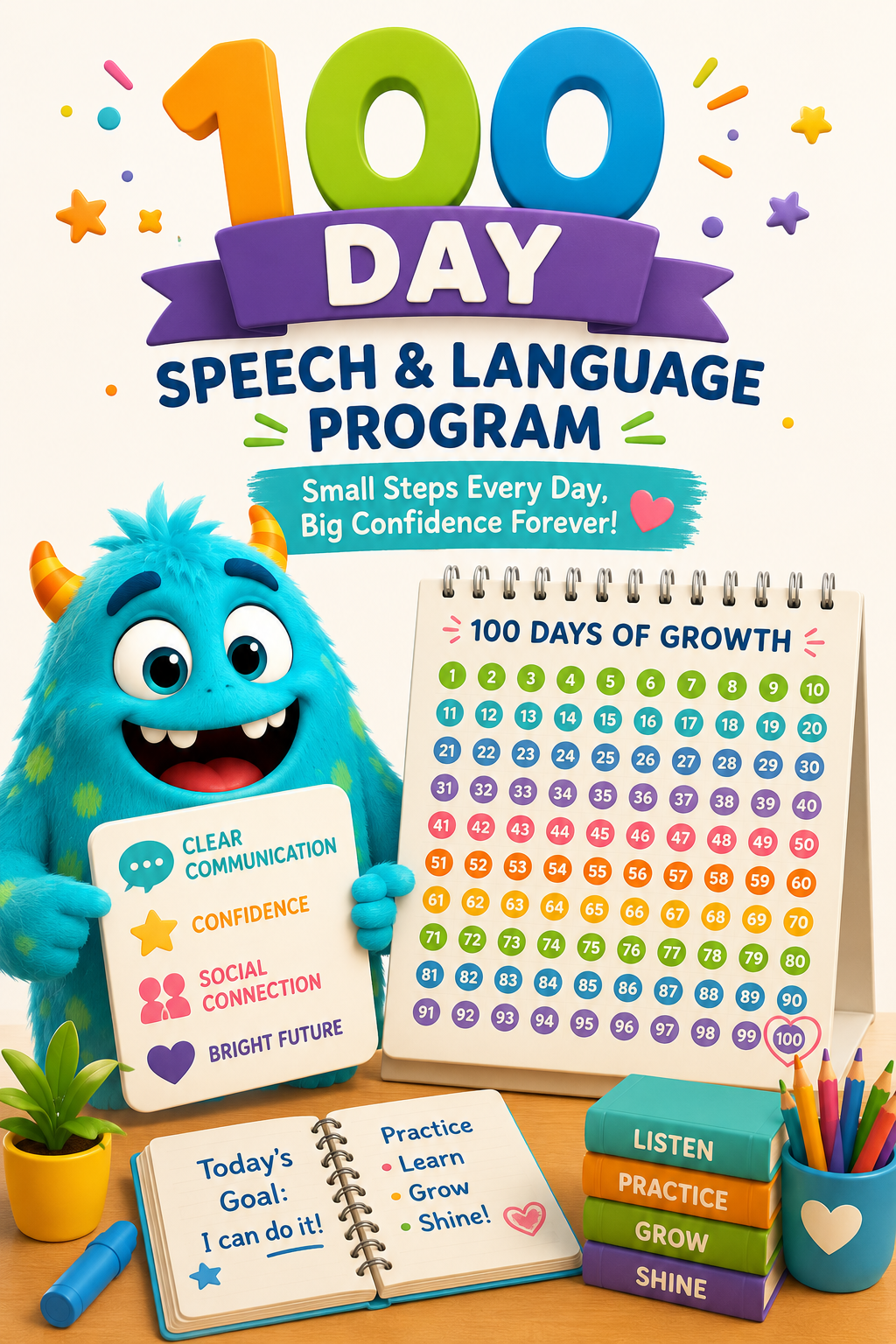
The daily structure of the programme is intentionally designed to be manageable and enjoyable. Small, consistent efforts tend to produce better long-term results than occasional intensive practice. Psychology refers to this as the power of incremental progress. When children experience regular success, they remain motivated and engaged. Learning becomes something they look forward to rather than something they feel forced to do.
Perhaps most importantly, our programme recognises that every child deserves to feel heard. Every child deserves the opportunity to express their thoughts, dreams, ideas and emotions without unnecessary barriers standing in the way. By supporting communication development early, parents are investing in far more than speech. They are investing in confidence, social connection, emotional wellbeing and future opportunity.
The goal is not perfection. The goal is empowerment. We want children to feel comfortable speaking up in the classroom, sharing stories with friends, introducing themselves to new people and expressing their ideas with confidence. These are the skills that help shape positive experiences throughout childhood and beyond.
When you choose our programme, you are not simply choosing speech activities. You are choosing a structured journey designed to help your child develop one of the most valuable abilities they will ever possess: the confidence to express themselves clearly, effectively and with genuine self-assurance. In a world where communication influences so many aspects of life, that may be one of the greatest gifts a parent can provide.